Clear Aligners vs Traditional Braces: Which Treatment Is Right for You?

Expert Insights: Understanding the Risks and Signs of Oral Cancer with Dr. Sita Sharma
August 11, 2026
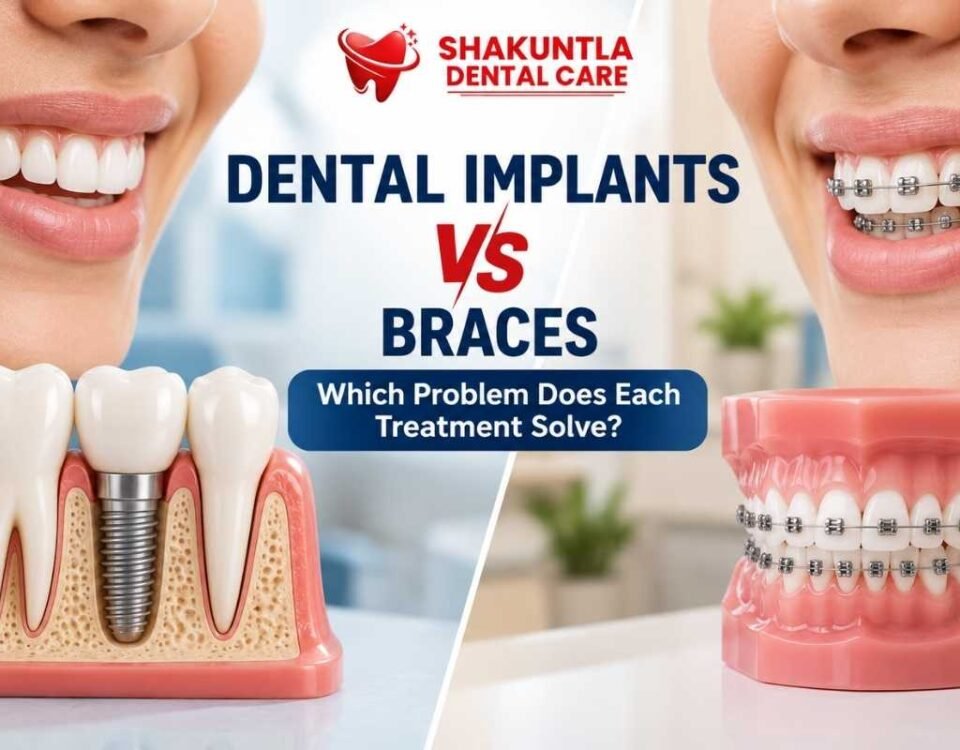
Dental Implants vs Braces: Which Problem Does Each Treatment Solve?
October 5, 2026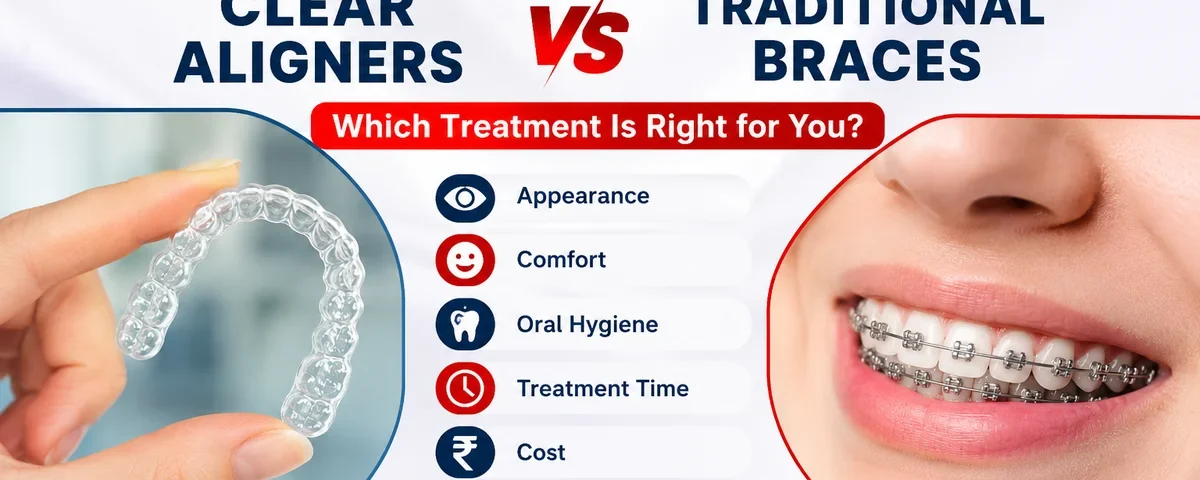
Choosing the right orthodontic treatment can feel confusing, especially when you have to decide between clear aligners and traditional braces. Both options are designed to straighten teeth, improve your bite, and create a healthier, more confident smile. However, they work differently and offer different experiences during treatment.
If you are considering orthodontic treatment, understanding the differences between clear aligners and traditional braces can help you make a more informed decision. The right choice depends on factors such as your dental condition, lifestyle, treatment goals, budget, and how consistently you can follow your dentist’s instructions.
What Are Traditional Braces?
Traditional braces are one of the most established methods for correcting misaligned teeth and bite problems. They use metal brackets that are attached to the teeth and connected with orthodontic wires. The wires apply controlled pressure to gradually move the teeth into their desired positions.
During treatment, the orthodontist periodically adjusts the wires to continue guiding the teeth. Traditional braces can treat a wide range of orthodontic problems, including crowded teeth, gaps, rotated teeth, overbites, underbites, and other bite-related concerns.
One of the biggest advantages of traditional braces is that they remain fixed to the teeth throughout treatment. This means patients do not have to remember to put them back in after eating or brushing.
What Are Clear Aligners?
Clear aligners are removable, transparent trays that are custom-made to fit over your teeth. They gradually move teeth by applying gentle and controlled pressure.
Instead of using brackets and wires, clear aligners use a series of trays. Each set is normally worn for a specific period before moving on to the next set. As treatment progresses, the trays gradually guide the teeth toward their planned positions.
Because they are transparent, clear aligners are much less noticeable than conventional metal braces. This makes them particularly appealing to adults and teenagers who prefer a more discreet orthodontic option.
For patients looking for an aesthetically subtle solution, Invisible Aligners Treatment in Sagarpur Delhi can be considered after a professional dental evaluation.
Clear Aligners vs Traditional Braces: Key Differences
Although both treatments aim to straighten teeth, the experience can be quite different.
1. Appearance
Appearance is one of the most noticeable differences.
Traditional metal braces are clearly visible because of their brackets and wires. While modern braces can look smaller and more comfortable than older designs, they are still noticeable.
Clear aligners are made from transparent material and fit closely over the teeth. When worn properly, they are much less visible, which can make them a preferred option for people who want their orthodontic treatment to remain discreet.
2. Comfort
Both treatments can cause some discomfort, particularly when the teeth are being moved.
Traditional braces may sometimes irritate the cheeks, lips, or gums because of brackets and wires. There may also be temporary soreness following adjustments.
Clear aligners generally do not have metal brackets or wires that can rub against the inside of the mouth. However, patients may experience pressure or mild soreness when starting a new set of aligners. This is usually a normal part of the tooth-movement process.
Comfort varies from person to person, so it is important to discuss your expectations with your dentist before starting treatment.
3. Eating and Drinking
Traditional braces can require more dietary care. Hard, sticky, or chewy foods may damage brackets or wires, potentially leading to additional dental visits.
Clear aligners are removable, which means you can generally take them out while eating. This allows you to enjoy a wider range of foods without worrying about damaging brackets.
However, aligners should be removed before eating and should be cleaned properly before being placed back in the mouth.
4. Oral Hygiene
Maintaining good oral hygiene is important with any orthodontic treatment.
With traditional braces, brushing and flossing can take more time because food particles and plaque can accumulate around brackets and wires. Special orthodontic brushes or flossing tools may be recommended.
Clear aligners can make daily cleaning easier because they can be removed while brushing and flossing. However, the aligners themselves also need regular cleaning. Poor oral hygiene can still lead to plaque buildup, tooth decay, or gum problems.
Clear aligners are therefore not a replacement for good oral hygiene habits.
5. Treatment Discipline
This is an important difference that is sometimes overlooked.
Traditional braces are fixed, so they remain on your teeth throughout treatment. You do not have to remember to wear them.
Clear aligners are removable, which provides flexibility but also requires responsibility. They generally need to be worn for most of the day, except when eating, drinking certain beverages, brushing, and flossing, according to your dentist’s instructions.
If you frequently forget to wear your aligners, treatment may not progress as planned.
6. Types of Dental Problems
Traditional braces can be highly versatile and are commonly used for a broad range of orthodontic problems, including more complex tooth movements and bite corrections.
Clear aligners can also correct many common alignment problems, such as mild to moderate crowding, spacing, and certain bite issues. However, they are not automatically suitable for every patient or every orthodontic condition.
The suitability of either treatment depends on your individual teeth, jaw relationship, bone support, and treatment goals. A professional assessment is essential before deciding.
Which Treatment Is Faster?
There is no single treatment duration that applies to everyone.
The length of orthodontic treatment depends on the severity of the problem, the amount of tooth movement required, the patient’s age, oral health, treatment plan, and how well the patient follows instructions.
Some straightforward cases may be completed relatively quickly, while complex cases can take considerably longer.
It is better to choose a treatment based on its suitability for your dental condition rather than simply choosing the option that appears faster.
Which One Is More Affordable?
The cost of clear aligners and traditional braces can vary significantly depending on the complexity of the case, treatment duration, materials used, dentist’s experience, and the number of appointments required.
Traditional braces may be more affordable in some cases, while clear aligners can cost more depending on the brand and treatment complexity. However, prices vary from clinic to clinic.
Instead of comparing only the initial price, consider the complete treatment plan, follow-up appointments, retainers, and other associated costs.
Are Clear Aligners Better Than Traditional Braces?
Not necessarily.
Clear aligners offer important benefits, particularly for people who value discreet treatment, removability, and easier access for brushing and eating. But they require discipline and may not be appropriate for every orthodontic case.
Traditional braces remain a reliable option and can be particularly useful when significant tooth movement or complex bite correction is required.
So, there is no universal winner. The better option is the one that is appropriate for your dental condition and that you can follow consistently.
How to Choose the Right Treatment
Before choosing between clear aligners and traditional braces, consider:
- The type and severity of your dental alignment problem
- Your treatment goals
- Your daily lifestyle and work requirements
- Your willingness to wear removable aligners consistently
- Your oral hygiene habits
- Your budget
- The expected treatment duration
- Your dentist’s professional recommendation
A detailed dental examination can help determine which option is suitable for you.
If you are searching for a Best Dentist in Sagarpur Delhi, make sure you choose a dental professional who evaluates your individual needs rather than recommending one treatment for everyone.
Don’t Choose Based Only on Appearance
Clear aligners are attractive because they are discreet, but appearance should not be the only factor when selecting orthodontic treatment.
The primary goal is to achieve healthy tooth alignment, proper bite function, good oral health, and stable long-term results. A treatment that looks convenient may not necessarily be the right treatment for your specific condition.
Your dentist should examine your teeth and gums, assess your bite, discuss your concerns, and explain the advantages and limitations of each option before treatment begins.
Final Thoughts
Both clear aligners and traditional braces can be effective ways to improve the alignment and appearance of your teeth. Clear aligners provide a discreet and removable alternative, while traditional braces offer a fixed treatment option that can address a wide range of orthodontic concerns.
The best choice depends on your individual dental needs, lifestyle, expectations, and ability to follow the treatment plan.
Rather than choosing based solely on cost, appearance, or what is currently popular, consult a qualified dental professional for a personalized assessment. With the right treatment plan and consistent care, you can work toward a healthier, better-aligned, and more confident smile.