Full-Mouth Dental Implant Myths: 10 Common Misconceptions and the Facts You Should Know

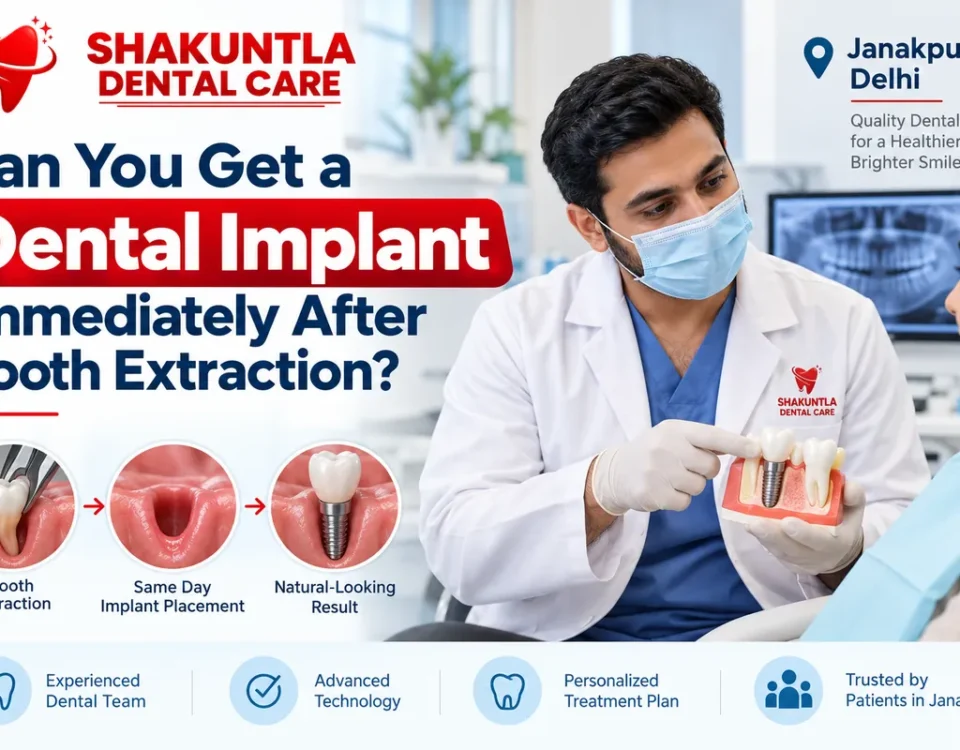
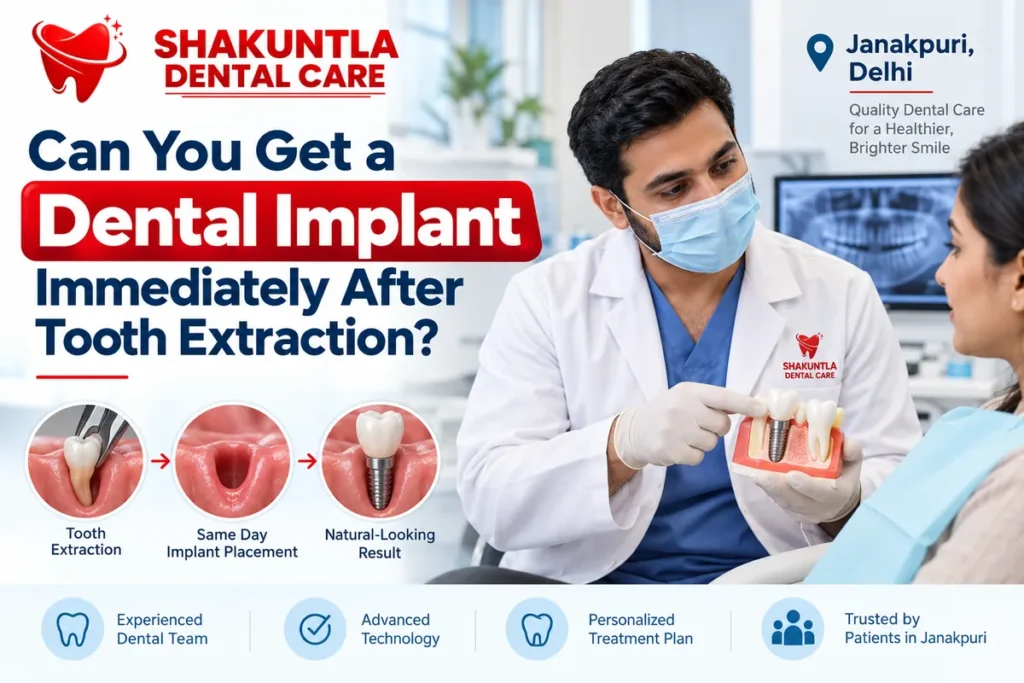
Can You Get a Dental Implant on the Same Day as Tooth Extraction? Benefits, Risks, and Recovery Explained
October 14, 2026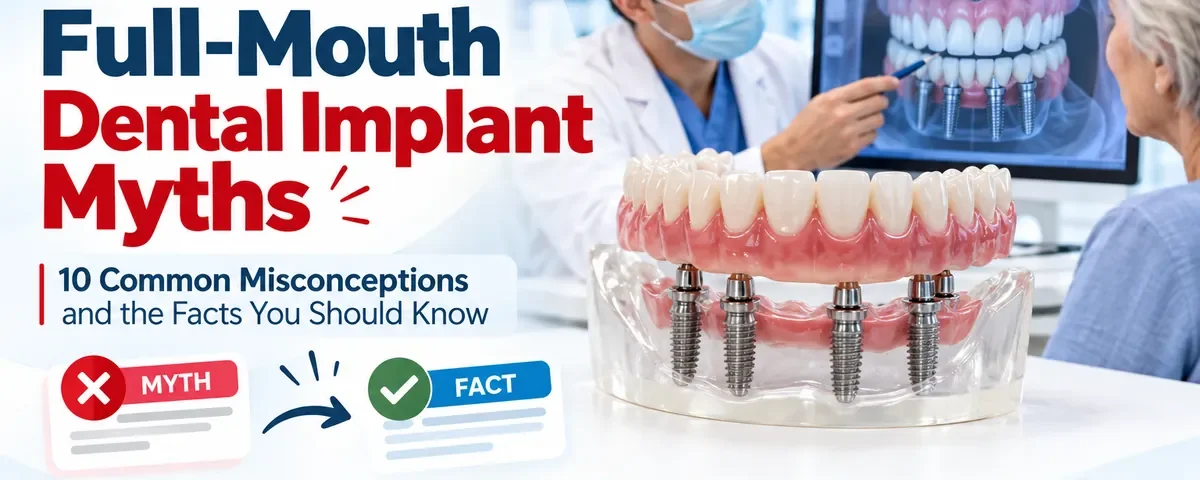
Full-mouth dental implants have become an established treatment option for people who have lost most or all of their teeth due to decay, gum disease, injury, or other oral health conditions. They can support fixed replacement teeth or removable implant-supported dentures, helping restore chewing ability, speech, and dental function.
However, several misconceptions about full-mouth dental implant treatment continue to create confusion. Some people believe the procedure is extremely painful, while others assume implants last forever without maintenance or that every missing tooth requires a separate implant.
Understanding the difference between myths and clinical facts is important before considering any permanent tooth replacement procedure.
Here are ten common myths about full-mouth dental implants and what dental evidence actually tells us.
Myth 1: Full-Mouth Dental Implants Require One Implant for Every Missing Tooth
Fact: A complete arch of replacement teeth can often be supported by fewer implants than the number of missing teeth.
One of the most common misconceptions is that replacing an entire arch of teeth requires an individual implant for every tooth.
In reality, full-arch dental implant treatment can use strategically positioned implants to support a complete set of artificial teeth.
For example, some treatment approaches use four or six implants to support a fixed dental bridge across one jaw.
The exact number depends on several factors, including jawbone density, bite forces, implant positioning, and the prosthetic design.
Therefore, replacing twelve or fourteen teeth does not automatically mean twelve or fourteen implants are necessary.
Myth 2: Full-Mouth Dental Implants Are Extremely Painful
Fact: Implant surgery is generally performed under anaesthesia, and postoperative discomfort is usually manageable.
Many patients associate dental implant surgery with severe pain because the procedure involves placing titanium implants into the jawbone.
However, local anaesthesia is commonly used to numb the surgical area. Sedation may also be considered for selected patients.
After surgery, temporary swelling, tenderness, bruising, and mild bleeding can occur.
The NHS explains that postoperative discomfort generally improves within the first week, although recovery varies depending on the procedure.
More extensive procedures, such as multiple extractions or bone grafting, may require additional recovery time.
Myth 3: Everyone Can Get Permanent Full-Mouth Implants in One Day
Fact: Same-day replacement teeth are possible for selected patients, but permanent restoration often requires additional healing.
Terms such as same-day dental implants and teeth in a day can create unrealistic expectations.
In certain cases, implants can be placed and connected to a temporary fixed prosthesis during the same appointment or shortly afterward.
However, this does not mean the implants have fully integrated with the jawbone.
The biological process of osseointegration generally takes several months.
A permanent bridge is typically fitted after adequate healing and stability have been confirmed.
Patients with significant bone loss, uncontrolled infection, or unsuitable implant stability may require a different treatment timeline.
Myth 4: Older Adults Cannot Get Full-Mouth Dental Implants
Fact: Age alone does not determine eligibility for dental implant treatment.
Some people assume dental implants are suitable only for younger adults because implant placement involves surgery and bone healing.
However, older adults may also qualify for full-mouth tooth replacement with implants.
The primary considerations include:
- Overall medical health
- Jawbone quality and quantity
- Gum health
- Ability to maintain oral hygiene
- Medications and existing medical conditions
Conditions such as poorly controlled diabetes or certain medications affecting bone metabolism may require additional assessment.
There is no universal upper age limit for dental implant treatment. Individual health and clinical suitability are more important than age alone.
Myth 5: Patients With Jawbone Loss Can Never Receive Dental Implants
Fact: Bone loss can complicate implant placement, but it does not automatically eliminate treatment options.
Jawbone deterioration commonly occurs after tooth loss because the bone no longer receives the same functional stimulation from natural tooth roots.
Significant bone loss can reduce the amount of support available for conventional implants.
However, some patients may qualify for bone augmentation procedures or alternative implant configurations.
Bone grafting can increase the amount of bone available for implant placement, although it may extend the treatment timeline.
According to NHS guidance, grafted bone may require several months to heal before implant placement
Not every patient requires bone grafting. Detailed examination and imaging help determine whether sufficient bone is available.
Myth 6: Full-Mouth Dental Implants Always Look Artificial
Fact: Well-designed implant-supported replacement teeth can closely resemble natural teeth.
Another common concern is that full-mouth dental implants create an unnatural-looking smile.
The final appearance depends largely on the design of the prosthesis, tooth proportions, materials, gum contours, and the relationship between the upper and lower jaws.
Replacement teeth can be designed with appropriate colour, shape, and alignment to complement a person’s facial features.
However, the appearance of a fixed full-arch bridge may differ from natural teeth because some designs include artificial gum material.
Aesthetic outcomes vary, and achieving a natural appearance requires careful restorative planning.
Myth 7: Dental Implants Do Not Require Brushing or Flossing
Fact: Full-mouth dental implants require regular cleaning and professional maintenance.
Although artificial teeth cannot develop cavities in the same way as natural teeth, the surrounding gum tissues remain vulnerable to inflammation and infection.
Bacterial plaque can accumulate around implant components and contribute to peri-implant diseases.
Two important conditions include:
Peri-implant mucositis: Inflammation affecting the soft tissues surrounding an implant without supporting bone loss.
Peri-implantitis: Inflammation associated with progressive loss of supporting bone around an implant.
The American Academy of Periodontology recommends regular oral hygiene and professional monitoring to reduce these risks.
Implant-supported bridges may require special floss, interdental brushes, or other cleaning aids depending on their design.
Myth 8: Full-Mouth Dental Implants Last Forever
Fact: Dental implants can provide long-term function, but their lifespan is not guaranteed.
Implants are designed to remain stable within the jawbone for many years.
However, their long-term survival depends on oral hygiene, overall health, implant loading, and maintenance.
Potential complications include infection, supporting bone loss, implant loosening, and mechanical damage to prosthetic components.
The artificial teeth attached to the implants may also experience wear or damage and eventually require repair or replacement.
Smoking, previous periodontal disease, and poorly controlled diabetes can increase the risk of implant-related complications.
Therefore, dental implants should be considered long-term restorations rather than replacements that are guaranteed to last a lifetime.
Myth 9: You Can Eat Anything Immediately After Full-Mouth Implant Surgery
Fact: Dietary restrictions are usually necessary during the initial healing period.
Full-mouth dental implants can help restore chewing ability, but this improvement is not immediate for every patient.
During early recovery, the implant sites must be protected from excessive pressure.
Patients are commonly advised to follow a soft-food diet for a period determined by their dentist.
Foods such as soft rice, yoghurt, cooked vegetables, soups, and other easily chewable meals may be appropriate.
Hard, crunchy, or sticky foods may need to be avoided, particularly when a temporary fixed bridge is attached.
As healing progresses, dietary restrictions can gradually be adjusted according to the stability of the implants and the dentist’s instructions.
Myth 10: Full-Mouth Dental Implants Are the Best Option for Everyone
Fact: Full-mouth implant treatment is not appropriate or necessary for every person with missing teeth.
Dental implants are one of several available options for replacing missing teeth.
Depending on the patient’s oral health, removable dentures, implant-supported overdentures, conventional bridges, or other restorative treatments may be suitable.
Importantly, healthy natural teeth should not be removed simply to make way for a complete implant-supported bridge.
Whenever possible, preserving natural teeth remains an important treatment consideration.
The most appropriate approach depends on the condition of the remaining teeth, jawbone support, medical history, financial considerations, and long-term maintenance requirements.
What Should You Know Before Considering Full-Mouth Dental Implants?
Before undergoing full-mouth dental implant treatment, it is important to understand the complete procedure rather than focusing only on the final replacement teeth.
A thorough assessment generally includes an examination of the gums and remaining teeth, dental imaging, evaluation of available bone, and discussion of medical conditions.
Treatment planning should also explain the expected healing period, possible complications, type of final prosthesis, maintenance requirements, and alternative treatment options.
For example, a fixed implant-supported bridge and a removable implant-supported denture may both use dental implants, but they differ in cleaning methods, design, maintenance, and cost.
Understanding these differences helps patients develop realistic expectations about the procedure and its long-term responsibilities.
Conclusion
Full-mouth dental implants can provide a functional solution for extensive tooth loss, but many widely believed claims about the procedure are inaccurate.
Implants do not always require one fixture per missing tooth, treatment is not necessarily completed in a single day, and artificial teeth still require consistent hygiene and maintenance.
Age and jawbone loss do not automatically prevent treatment, but eligibility depends on individual clinical circumstances.
Understanding these facts allows patients to evaluate the benefits, limitations, and responsibilities associated with full-mouth implant treatment before making an informed decision.