Dental Implants vs Braces: Which Problem Does Each Treatment Solve?

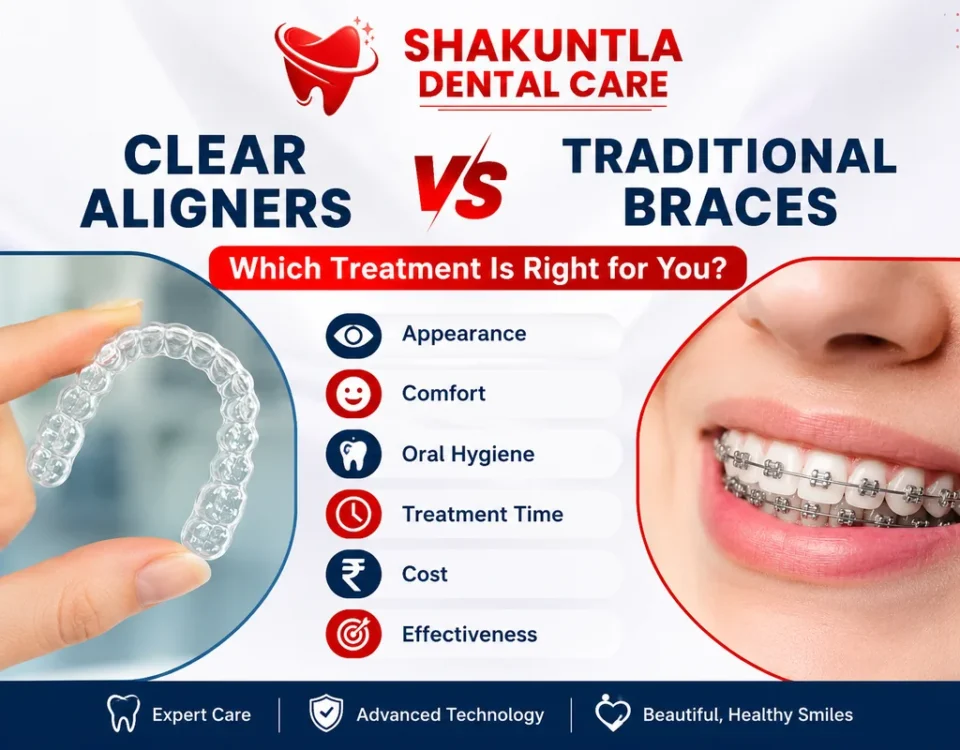
Clear Aligners vs Traditional Braces: Which Treatment Is Right for You?
August 22, 2026
Can You Get a Dental Implant on the Same Day as Tooth Extraction? Benefits, Risks, and Recovery Explained
October 14, 2026
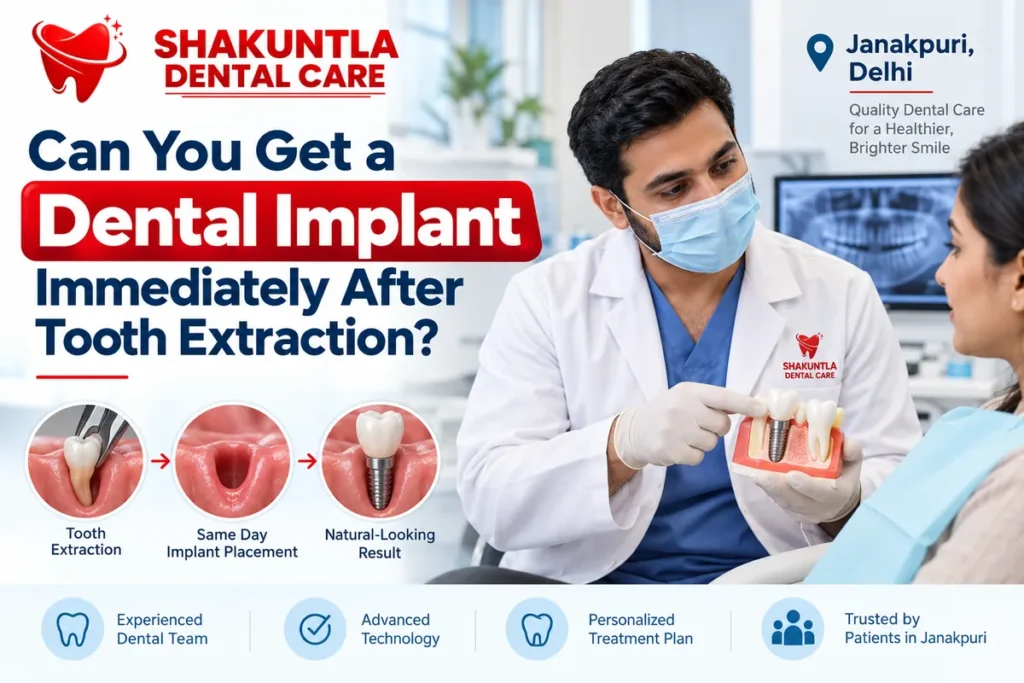
Dental implants and braces are both common dental treatments, but they are designed to solve very different problems. If you have missing teeth, dental implants may help restore your smile and chewing function. If your teeth are crowded, crooked, or poorly aligned, braces may be recommended to move them into a better position.
Because both treatments can improve the appearance and function of your teeth, patients sometimes confuse their purpose. Understanding the difference between dental implants and braces can help you know which treatment may be suitable for your dental concern.
What Are Dental Implants?
Dental implants are a long-term tooth replacement option for people who have lost one or more teeth. An implant consists of a small post, usually made from titanium or another biocompatible material, that is placed into the jawbone.
After the implant integrates with the bone, it can support a dental crown, bridge, or other restoration. The final restoration is designed to look and function like a natural tooth.
Dental implants can be used when a tooth is missing because of decay, injury, gum disease, or other dental conditions.
The main purpose of an implant is to replace a missing tooth, not to straighten existing teeth.
What Are Braces?
Braces are orthodontic appliances used to correct problems related to the position and alignment of teeth. They apply controlled pressure over time to gradually move teeth into better positions.
Traditional braces usually consist of brackets attached to the teeth and connected with orthodontic wires. Depending on the patient’s needs, different types of braces and orthodontic appliances may be recommended.
Braces can help address concerns such as:
- Crowded teeth
- Crooked teeth
- Gaps between teeth
- Certain bite problems
- Teeth that are rotated or positioned incorrectly
- Some cases of overbite and underbite
The main purpose of braces is to move and align teeth, rather than replace missing teeth.
Dental Implants vs Braces: The Main Difference
The simplest way to understand the difference is to look at the problem each treatment is designed to solve.
Dental implants replace missing teeth.
Braces correct the position and alignment of existing teeth.
For example, if you have lost a molar and there is now a gap in your smile, braces will not replace that missing tooth. A dental implant may be considered to restore the missing tooth.
On the other hand, if all your teeth are present but several are crowded or crooked, an implant would not normally be the solution. Orthodontic treatment such as braces may be considered to improve their alignment.
When Might You Need Dental Implants?
A dental implant may be considered when one or more teeth are missing and there is a need for a stable tooth replacement.
Missing teeth can affect more than just appearance. They may make chewing difficult and can change how the remaining teeth contact each other. In some situations, tooth loss can also contribute to changes in the surrounding bone over time.
During an implant consultation, a dentist will examine your teeth and gums and assess the condition of the jawbone. Your overall oral health and the location of the missing tooth are also important factors.
Not everyone is immediately suitable for an implant. Conditions such as insufficient bone support or active gum disease may need to be addressed before implant treatment.
When Might You Need Braces?
Braces may be recommended when teeth are not properly aligned or when there is a bite problem that needs orthodontic correction.
Common signs that may indicate a need for orthodontic assessment include:
- Teeth overlapping each other
- Noticeably crooked teeth
- Large gaps between teeth
- Difficulty cleaning crowded areas
- Teeth that do not meet properly when biting
- Jaw or bite concerns
- Teeth that have shifted from their normal position
The need for braces should be determined through a professional examination. Some alignment concerns may be mild, while others may require more extensive orthodontic treatment.
Can You Need Both Dental Implants and Braces?
Yes, in some cases, a patient may need both treatments, but they serve different purposes.
For example, a person may have a missing tooth as well as crowded or poorly aligned teeth. Orthodontic treatment may be planned to create or maintain the appropriate space before a missing tooth is replaced.
The order and timing of treatment depend on the individual case. In some situations, orthodontic treatment may be considered before implant placement. In other cases, an implant may already be present and the orthodontic plan needs to take it into account.
This is why treatment planning should be done by a qualified dental professional rather than choosing a procedure based only on appearance.
Dental Implants vs Braces for Appearance
Both treatments can improve the appearance of your smile, but they do so in different ways.
Dental implants can replace a missing tooth with a restoration designed to resemble a natural tooth. This can help restore the appearance of a complete smile.
Braces can improve the alignment of natural teeth. By correcting crowding, spacing, and certain bite issues, orthodontic treatment can create a more balanced tooth arrangement.
If your main concern is a missing tooth, braces alone will not solve the problem. If your concern is crooked or crowded teeth, replacing a tooth with an implant will not correct the overall alignment.
Dental Implants vs Braces for Chewing and Function
Both treatments can contribute to better oral function, but again, their roles are different.
A missing tooth can make chewing less comfortable or efficient, particularly when the missing tooth is involved in biting or grinding food. A properly planned dental implant restoration can help restore that missing tooth.
Braces, meanwhile, are intended to improve tooth positioning and bite relationships. Better alignment can make certain aspects of biting and cleaning easier, depending on the individual’s original condition.
The goal of either treatment should not be based only on aesthetics. Maintaining healthy teeth, gums, and proper oral function is equally important.
How Long Do Dental Implants and Braces Take?
Treatment time varies considerably between patients.
Dental implant treatment involves several stages. These can include evaluation, implant placement, healing, and placement of the final restoration. The overall timeline depends on factors such as bone condition, gum health, the number of missing teeth, and whether additional procedures are required.
Braces also require time because teeth need to move gradually. Treatment duration depends on the severity of the alignment problem, the type of orthodontic correction required, age, oral health, and how well the patient follows the treatment plan.
There is no single treatment duration that applies to everyone. Your dentist or orthodontic professional can provide a more realistic estimate after examining your teeth.
Which Treatment Is Right for You?
The answer depends entirely on the dental problem you are trying to solve.
If you have missing teeth, dental implants may be one of the options considered for tooth replacement.
If you have crooked, crowded, or misaligned teeth, braces or another orthodontic treatment may be more appropriate.
If you have both missing and misaligned teeth, your dentist may recommend a combined treatment plan. In such cases, careful planning is particularly important to achieve a functional and natural-looking result.
Choosing a treatment without understanding the underlying dental problem can lead to unnecessary treatment. A professional dental examination is therefore the best starting point.
Why a Dental Consultation Matters
Every patient’s teeth, gums, bone structure, and bite are different. A treatment that works well for one person may not be suitable for another.
A dental consultation allows the dentist to assess your oral health and understand what you want to improve. Depending on your situation, the dentist may recommend dental X-rays, scans, photographs, or other diagnostic tests before creating a treatment plan.
If you are looking for a Best dentist in Janakpuri, choose a dental clinic where your condition can be properly assessed and different treatment options can be explained clearly before you make a decision.
Final Thoughts
Dental implants and braces are not competing treatments. They solve different dental problems.
Dental implants are primarily used to replace missing teeth, while braces are used to correct tooth alignment and certain bite problems. Understanding this basic difference can make it easier to discuss your options with your dentist.
If you have missing teeth, crooked teeth, gaps, crowding, or a combination of these concerns, avoid choosing a treatment based only on online information. A professional dental evaluation can help identify the underlying problem and determine the most suitable treatment approach for your smile, oral health, and long-term needs.