Can You Get a Dental Implant on the Same Day as Tooth Extraction? Benefits, Risks, and Recovery Explained

Dental Implants vs Braces: Which Problem Does Each Treatment Solve?
October 5, 2026
Full-Mouth Dental Implant Myths: 10 Common Misconceptions and the Facts You Should Know
October 19, 2026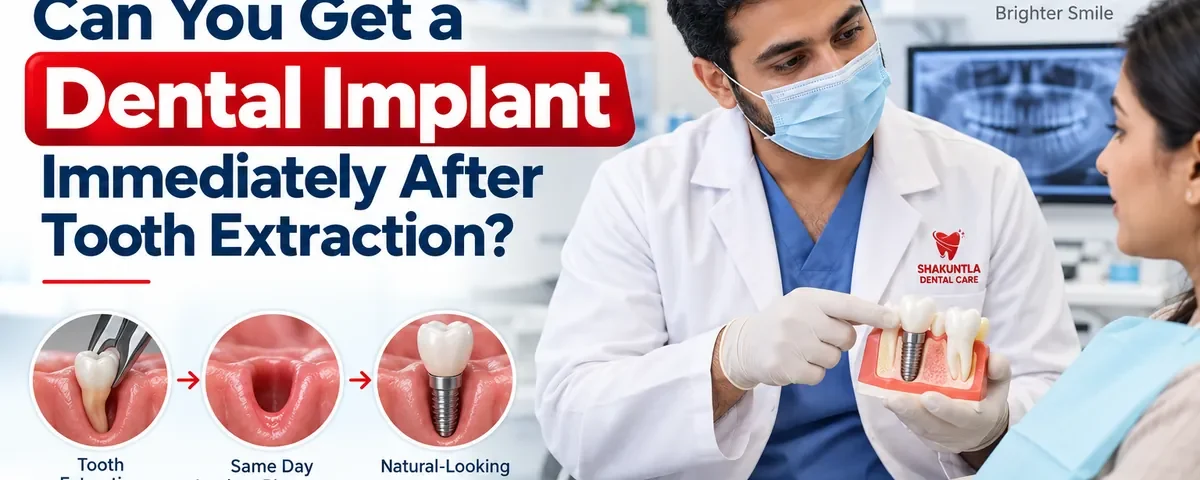
Losing a tooth due to severe decay, infection, injury, or gum disease can be concerning, especially when it affects your ability to chew, speak, or smile confidently. Traditionally, patients had to wait several months after tooth extraction before receiving a dental implant. However, advances in implant dentistry have made it possible for certain patients to undergo tooth extraction and implant placement during the same appointment.
This procedure, known as immediate dental implant placement, can reduce the number of surgical appointments and shorten the overall treatment process.
But can everyone get a dental implant immediately after tooth extraction? Is it as reliable as conventional implant treatment, and what factors determine whether you qualify?
Understanding the procedure, its benefits, limitations, and recovery requirements can help you make an informed decision.
What Is an Immediate Dental Implant?
An immediate dental implant is a procedure in which a dental implant is inserted into the jawbone immediately after a damaged or infected tooth is extracted.
Instead of waiting for the extraction site to heal completely, the dentist places the implant into the newly emptied tooth socket during the same surgical appointment.
A dental implant typically consists of three components:
- Implant post: A titanium fixture inserted into the jawbone to replace the missing tooth root.
- Abutment: A connecting component between the implant and replacement tooth.
- Dental crown: An artificial tooth designed to restore appearance and chewing function.
However, immediate implant placement does not necessarily mean receiving a permanent tooth on the same day.
The implant must integrate with the surrounding jawbone through a biological process called osseointegration, which generally takes several months.
Can You Get a Dental Implant Immediately After Tooth Extraction?
Yes, immediate dental implant placement is possible, but eligibility depends on the condition of your jawbone, surrounding gum tissues, overall oral health, and the reason for tooth extraction.
The dentist must determine whether the remaining bone can hold the implant securely in the correct position.
According to the International Team for Implantology (ITI), immediate placement can be an appropriate treatment option when specific anatomical and clinical requirements are satisfied.
Patients considering a dental implant in Janakpuri, Delhi should undergo a detailed dental examination before deciding whether immediate or delayed implant placement is more suitable.
Who Is a Suitable Candidate for Same-Day Dental Implants?
Not every patient is eligible for immediate implant placement. Several factors influence the safety and predictability of the procedure.
1. Adequate Jawbone Density
The implant requires sufficient healthy bone to achieve initial stability. If severe bone loss has occurred due to periodontal disease, infection, or long-term dental problems, immediate placement may not be appropriate.
2. Healthy Gum Tissues
Healthy gums support healing and help protect the implant. Patients with uncontrolled periodontal disease may require treatment before undergoing implant surgery.
3. No Uncontrolled Acute Infection
An active acute infection at the extraction site can complicate immediate implant placement.
Certain chronic infections do not automatically rule out immediate implants, provided the infection can be thoroughly treated and adequate supporting bone remains.
4. Good General Health
Conditions such as poorly controlled diabetes may interfere with healing. Smoking and tobacco consumption can also increase the risk of implant complications.
A dentist will assess your medical history, medications, and relevant health conditions before recommending treatment.
5. Sufficient Implant Stability
The implant must remain firmly positioned within the jawbone immediately after insertion. If adequate stability cannot be achieved, delaying implant placement may offer a safer alternative.
How Is an Immediate Dental Implant Procedure Performed?
The procedure usually involves several carefully planned stages.
Step 1: Dental Examination and Imaging
The dentist examines your teeth, gums, and jawbone. Dental X-rays and, when indicated, a cone-beam CT scan help assess bone availability, extraction socket anatomy, and nearby structures.
Step 2: Tooth Extraction
The damaged tooth is carefully extracted under local anaesthesia. The dentist aims to preserve as much surrounding bone and gum tissue as possible.
Step 3: Implant Placement
After cleaning and examining the extraction socket, the dentist places the implant into the jawbone if suitable conditions are present.
Step 4: Bone Grafting When Necessary
Some patients may require bone grafting to support the tissues around the implant. The need for grafting depends on the shape and condition of the extraction socket.
Step 5: Temporary Restoration and Healing
A temporary tooth may be provided when implant stability and other conditions permit. Otherwise, the implant is protected while healing takes place.
The permanent crown is generally fitted after sufficient bone integration has occurred.
Benefits of Getting a Dental Implant Immediately After Extraction
Immediate implant placement can offer several advantages for suitable patients.
Fewer surgical appointments: Tooth extraction and implant placement can be completed during one surgical visit.
Shorter overall treatment timeline: Eliminating the initial waiting period may reduce the total time needed for tooth replacement.
Potentially reduced surgical interventions: Combining procedures can avoid a separate implant-placement surgery after socket healing.
Earlier restoration of appearance: Selected patients, particularly those replacing front teeth, may receive a temporary restoration.
Support for natural tissue contours: Immediate placement, sometimes combined with grafting, may help manage changes in the surrounding tissues. However, it does not completely prevent bone resorption after extraction.
These benefits depend on careful treatment planning and appropriate patient selection.
What Are the Risks and Limitations?
Although immediate dental implants can be successful, the procedure also involves potential complications.
These include:
- Implant instability during early healing.
- Infection or inflammation around the surgical site.
- Gum recession affecting the appearance of the replacement tooth.
- Continued jawbone changes after extraction.
- Implant failure if proper bone integration does not occur.
Immediate implants are particularly challenging when the surrounding bone is thin or damaged.
Research-based guidance from the ITI emphasises that careful patient selection is essential, especially when replacing visible front teeth.
Therefore, receiving an implant immediately is not necessarily better than waiting.
When Is It Better to Wait After Tooth Extraction?
Delayed implant placement may be recommended when the extraction site requires additional healing or treatment.
Depending on the clinical situation, implant placement may be scheduled approximately:
- 4–8 weeks after extraction: Allowing initial gum tissue healing.
- 12–16 weeks after extraction: Allowing additional bone healing.
- More than six months later: When a longer healing period is necessary.
These are recognised treatment-timing categories rather than fixed schedules for every patient.
The appropriate waiting period depends on infection control, bone condition, grafting requirements, and overall treatment planning.
Recovery After Immediate Dental Implant Surgery
Recovery is an important part of successful implant treatment.
Mild swelling, tenderness, and minor bleeding can occur during the first few days following surgery.
Patients should follow their dentist’s instructions carefully, including:
- Eating soft foods during the initial recovery period.
- Avoiding chewing directly over the surgical site.
- Maintaining oral hygiene without disturbing the healing tissues.
- Avoiding smoking and tobacco products.
- Taking prescribed medication as directed.
- Attending scheduled follow-up appointments.
Although initial discomfort often improves within several days, complete bone integration takes considerably longer.
Contact your dentist if you experience worsening pain, persistent bleeding, fever, increasing swelling, or other unusual symptoms.
How Do You Know Which Dental Implant Treatment Is Right for You?
The right treatment depends on more than how quickly a missing tooth can be replaced.
A detailed consultation should assess jawbone quality, gum health, existing dental infections, medical history, and long-term restorative requirements.
Patients searching for the best dentist in Janakpuri, Delhi should prioritise proper diagnosis, transparent explanations of treatment options, and realistic expectations rather than choosing a procedure based solely on speed.
At Shakuntla Dental Care in West Sagarpur, near Janakpuri, patients can discuss dental implant options and the investigations needed to determine a suitable treatment approach.
Frequently Asked Questions
Is a same-day dental implant painful?
The procedure is generally performed under local anaesthesia, which numbs the treatment area. Mild discomfort, swelling, and tenderness may occur afterward, but these symptoms can usually be managed with appropriate aftercare and dentist-recommended medication.
Can a dental implant be placed after extracting an infected tooth?
It may be possible in selected cases. However, the type and severity of infection, remaining bone support, and ability to clean the extraction site thoroughly must be evaluated before implant placement.
How long does an immediate dental implant take to heal?
Initial gum healing generally occurs over the first few weeks, while the implant may require several months to integrate with the jawbone. Healing times vary according to individual health and treatment complexity.
Is an immediate dental implant better than a traditional implant?
Neither approach is universally better. Immediate implants can shorten treatment time for suitable candidates, while delayed placement may provide a more predictable option when bone or gum conditions are unfavourable.
Conclusion
Getting a dental implant immediately after tooth extraction is possible for many patients, but it requires careful assessment of bone stability, gum health, infection, and overall medical condition.
While immediate placement may reduce appointments and shorten treatment time, it should never be prioritised over long-term implant stability.
A thorough dental examination and personalised treatment plan are essential for determining whether same-day or delayed implant placement offers the most appropriate solution for replacing a missing tooth.