Expert Insights: Understanding the Risks and Signs of Oral Cancer with Dr. Sita Sharma

Clear Aligners vs Traditional Braces: Which Treatment Is Right for You?
August 22, 2026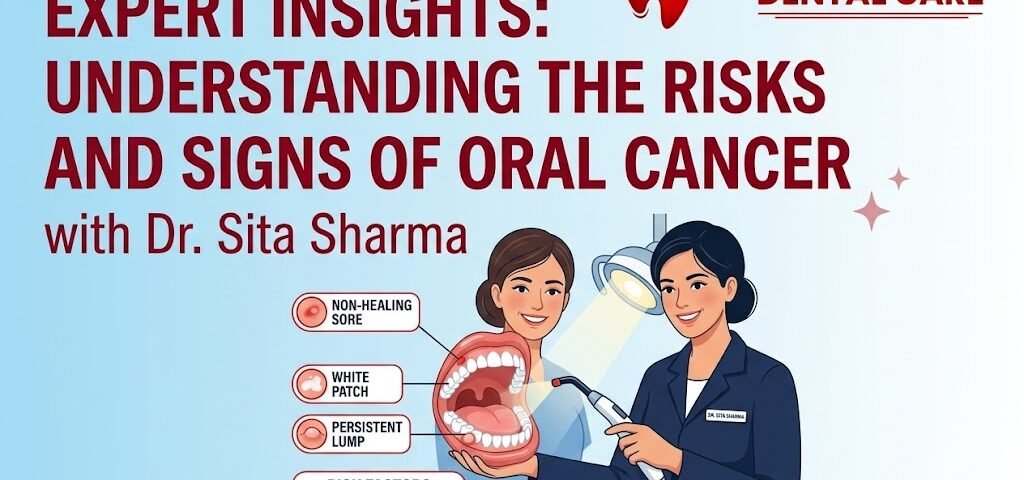
When we think about our oral health, our minds naturally drift toward preventing cavities, achieving a brighter smile, or perhaps straightening misaligned teeth. However, there is a much more serious condition that often goes unnoticed until it reaches an advanced stage: oral cancer.
Oral cancer is a silent threat that can affect anyone, but with awareness, regular screenings, and proactive dental care, it is highly preventable and treatable. To help you understand this condition better, Dr. Sita Sharma at Shakuntla Dental Care shares her expert insights on the risks, early warning signs, and the critical importance of early detection.
What is Oral Cancer?
Oral cancer, which falls under the broader category of head and neck cancers, can develop in any part of the oral cavity. This includes the lips, gums, tongue, the inner lining of the cheeks, the roof of the mouth, and the floor of the mouth (under the tongue). It can also occur in the oropharynx, which is the part of the throat located just behind the mouth.
Like all forms of cancer, oral cancer begins when cells in the mouth develop mutations in their DNA. These mutations allow the cells to grow and divide uncontrollably, forming a tumor. If not caught early, these malignant cells can spread to other parts of the head, neck, and eventually the rest of the body.
The Primary Risk Factors: Are You at Risk?
Understanding what increases your risk of developing oral cancer is the first step in prevention. While it can occur in individuals with no known risk factors, Dr. Sita Sharma notes that several lifestyle choices and biological factors significantly increase the likelihood of the disease:
1. Tobacco Use
This remains the single largest risk factor for oral cancer. Whether it is smoking cigarettes, cigars, or pipes, or using smokeless tobacco products like chewing tobacco and snuff, the carcinogenic chemicals in tobacco products constantly irritate the cellular lining of the oral cavity. Smokeless tobacco, in particular, is heavily linked to cancers of the cheek, gums, and inner lips.
2. Heavy Alcohol Consumption
Alcohol acts as a solvent, making it easier for cancer-causing chemicals (like those found in tobacco) to enter the cells of the mouth. People who both smoke and drink heavily are at a substantially higher risk—up to 15 times more likely to develop oral cancer than those who abstain from both.
3. Human Papillomavirus (HPV) Infection
In recent years, the medical community has seen a sharp rise in oral cancers linked to the Human Papillomavirus (specifically HPV strain 16). HPV-related oral cancers typically develop at the back of the throat, the base of the tongue, and the tonsils. This strain is often found in younger, non-smoking patients, making regular dental screenings essential for everyone, regardless of age or habits.
4. Excessive Sun Exposure
Just as UV rays can cause skin cancer on your arms or face, prolonged sun exposure without protection is a significant risk factor for lip cancer, particularly on the lower lip which catches more direct sunlight.
5. Age and Gender
Historically, oral cancer has been most commonly diagnosed in men over the age of 55. Men are twice as likely as women to develop the disease, largely due to historically higher rates of tobacco and alcohol use. However, with the rise of HPV-related cancers, the demographic is slowly shifting.
Recognizing the Early Signs and Symptoms
The most dangerous aspect of oral cancer is that it is often painless in its early stages. Patients may notice a physical change in their mouth but dismiss it because it doesn’t hurt. Dr. Sita Sharma emphasizes that knowing what to look for and acting quickly is vital.
If you experience any of the following symptoms for more than two weeks, it is crucial to schedule an evaluation:
- Persistent Sores: A sore, blister, or ulcer in the mouth or on the lip that bleeds easily and refuses to heal.
- Color Changes: Velvety white, red, or speckled (red and white) patches inside the mouth. White patches (leukoplakia) and red patches (erythroplakia) can sometimes be precancerous lesions.
- Lumps and Thickenings: A noticeable lump, thickening, rough spot, crust, or small eroded area in the mouth, lips, or neck.
- Pain and Difficulty: Unexplained pain in the mouth, difficulty chewing, swallowing, speaking, or moving the jaw or tongue.
- Numbness: A loss of feeling or a sensation of numbness in the lips, face, neck, or mouth.
- Ear Pain: Unexplained, persistent ear pain on one side without any accompanying hearing loss or ear infection.
- Changes in Bite: The way your upper and lower teeth fit together suddenly changes, or dentures begin to fit poorly or become uncomfortable.
The Critical Role of Regular Screenings
Because the early signs of oral cancer can easily be mistaken for a common toothache, a cold sore, or a simple bite on the cheek, professional screenings are your best line of defense. During a routine dental exam, your dentist isn’t just looking for cavities—they are examining the entire oral cavity, feeling the lymph nodes in your neck, and looking for any abnormalities.
When oral cancer is detected in its earliest stages, the survival rate is extremely high, often exceeding 80 to 90 percent. Unfortunately, because many people skip their regular dental checkups, a large portion of oral cancers are discovered late, requiring far more invasive treatments and resulting in a lower survival rate.
Beyond Cancer: The Importance of Total Oral Health
Preventing chronic irritation in the mouth is also a key factor in long-term oral health. Sometimes, chronic trauma from jagged teeth, poorly fitting dentures, or severe misalignments can cause persistent sores. Ensuring your teeth are properly aligned doesn’t just give you a beautiful smile; it makes cleaning easier, reduces chronic tissue irritation, and promotes overall oral health.
If you struggle with severely misaligned teeth that are causing bite issues or soft tissue irritation, seeking orthodontic care is highly recommended. For those looking for expert orthodontic solutions, consulting with the Best Orthodotist in Sagarpur Delhi ensures that your teeth and jaw are perfectly aligned, reducing unwanted friction and trauma inside your mouth.
Taking Action with Shakuntla Dental Care
Prevention and early detection are in your hands. By modifying lifestyle habits—such as quitting tobacco, moderating alcohol intake, maintaining a diet rich in fruits and vegetables, and using UV-protective lip balm—you can drastically reduce your risk profile.
However, nothing replaces the trained eye of a dental professional. Make oral cancer screenings a non-negotiable part of your healthcare routine. Dr. Sita Sharma and her dedicated team are committed to providing comprehensive care that looks beyond the surface of your teeth to safeguard your overall well-being.
Do not wait for pain to prompt a dental visit. If you notice any unusual changes in your mouth, or if you are simply due for your routine checkup and oral cancer screening, trust your care to the Best Dentist in Sagarpur Delhi. Prioritize your health today—because early detection truly does save lives.